Sump Pump Failure Cleanup in Livingston, NJ
Water rising from a sump area can continue entering while a pump is being repaired. The mitigation team assesses the inflow and safe access, then maps wet flooring and wall bases beyond the pit.
(888) 471-9821Assess the overflow beyond the pit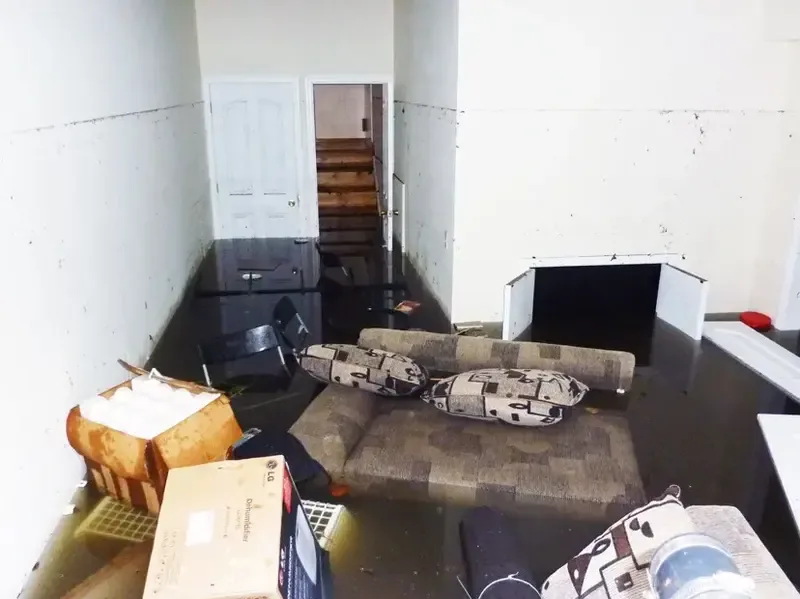
First steps for sump pump failure cleanup
- 01Observe from dry access
Report pit level and visible overflow without approaching wet cords, controls or electrical outlets around the sump.
- 02Identify continuing water
Tell the contractor whether inflow persists so extraction planning accounts for water still entering the lower level.
- 03Arrange system evaluation
Have the source professional assess pump operation and discharge conditions rather than repeatedly resetting uncertain wet equipment.
- 04Map connected rooms
List nearby finished spaces and storage areas that may hide spread beneath flooring or behind wall bases.
How the team handles sump pump failure cleanup
Pump service restores a drainage function; cleanup addresses the resulting building damage. The contractor distinguishes the equipment fault, ongoing entry and moisture retained in finished lower-level materials.
Separate fault from consequence
The source professional evaluates the pump system while the restoration assessor documents the building materials reached by overflow.
Manage ongoing inflow safely
The extraction team selects recovery equipment and a suitable discharge route, monitoring whether new water changes the affected footprint.
Expose saturated room edges
The contractor checks underlayment, wall bases and enclosed storage zones, removing damaged or contaminated absorbent material where necessary.
Verify drainage and drying progress
Repeated material readings track recovery while the pump-service findings establish whether the entry problem has been resolved sufficiently for continued drying.
What does sump pump failure cleanup cost in Livingston, NJ?
Sump overflow mitigation often ranges from $1,200 to $6,000 or more, depending on continuing inflow and finished-room damage. Pump replacement, electrical work and discharge repairs are separate scope items.
The assessment separates immediate mitigation from later repairs. Review the material decisions and equipment allowance in the written scope.
(888) 471-9821Discuss the pit and room conditionsLimited pit-area overflow
- Controlled water recovery
- Initial source coordination
- Focused material checks
Finished-room spread
- Floor-edge access
- Wet wall-base assessment
- Balanced drying equipment
Persistent or extensive inflow
- Ongoing extraction planning
- Broader material removal
- Extended progress records
Scope factors: Water category, wet square footage, material class and the delay before drying change the equipment and removal required.
Use the water damage cost calculator for a planning estimate; a site assessment determines the work.
Sump Pump Failure Cleanup work stages
- 01
Separate fault from consequence
The source professional evaluates the pump system while the restoration assessor documents the building materials reached by overflow.
- 02
Manage ongoing inflow safely
The extraction team selects recovery equipment and a suitable discharge route, monitoring whether new water changes the affected footprint.
- 03
Expose saturated room edges
The contractor checks underlayment, wall bases and enclosed storage zones, removing damaged or contaminated absorbent material where necessary.
- 04
Verify drainage and drying progress
Repeated material readings track recovery while the pump-service findings establish whether the entry problem has been resolved sufficiently for continued drying.
The Passaic River boundary provides township water context, but it does not determine whether a home has a sump or why one failed. A property near Northland Park or along Eisenhower Parkway needs an inspection of its own pit, discharge and power conditions before the cause is assigned.
A working replacement pump does not define the damage boundary
Water can spread under floor coverings and wick into wall bases before a pit level drops. The assessor checks finished areas beyond the mechanical corner, including closets and storage zones. A dry-looking path back to the stairs may still sit above wet underlayment.
The source professional evaluates the pump, controls and discharge arrangement. Loss of power, a blocked discharge and mechanical failure require different repair decisions. The mitigation crew records what is known about the cause without diagnosing the system solely from an overflowing pit.
- Report whether the pit continues rising after water removal begins.
- Keep clear of wet pump cords, outlets and extension leads.
- Identify finished rooms that connect to the sump area.
- Preserve repair findings about the pump and discharge for the loss file.
Continuing inflow changes extraction planning
A crew may need to manage water that keeps entering while the source professional restores drainage. Removal capacity and discharge routing must fit the actual conditions. A hose that sends water back toward the building can undermine recovery, so its destination needs assessment rather than improvisation.
The contractor evaluates contamination from the water's contact path. A sump-related loss should not automatically be called clean because it is not visibly sewage. Soil, dirty cavities and connected drainage conditions may change material handling and the decision to retain absorbent finishes.
Dry the room after the pit level falls
The drying specialist checks wall bases, framing and accessible floor layers after bulk water removal. Damp storage and enclosed partitions can keep adding moisture to the room. Equipment placement and repeated readings should address those materials, while the pump repair record confirms that continuing inflow is under control.
Never step into standing water to reconnect a pump or test its outlet. Electrical equipment near the pit requires a safe assessment before use. Keep generators outside and away from building openings. If water continues rising, describe the change from a dry location and seek assistance; do not treat a running motor as proof that the drainage system is functioning.
A falling pit level does not reveal all the wet materials. Describe continuing inflow and finished rooms connected to the sump area.
(888) 471-9821Discuss the pit and room conditionsSump pump failure cleanup in Livingston
Water damage assistance covers ZIP 07039, Northfield Center, Livingston Center and Livingston Circle. The assessment follows the wet materials in each building.
Other water problems to check
Sump Pump Failure Cleanup questions
Does a running pump prove the problem is fixed?
No. A motor can run while discharge or control problems remain. A source professional should evaluate whether the system is actually removing incoming water effectively.
Is sump overflow always clean water?
No. The assessor considers the source and contact path, including soil and dirty cavities. Clear appearance does not determine the cleanup category.
Why inspect rooms away from the pit?
Water can travel under connected floor coverings and into wall bases before the pit level drops. The damage boundary can extend beyond the mechanical area.
Can the owner reconnect a wet pump cord?
No one should enter standing water or handle uncertain wet electrical equipment. Safe electrical evaluation comes before operating equipment around the pit.
Does pump replacement include room drying?
Those are separate tasks. Replacing the pump addresses drainage, while the mitigation contractor evaluates extraction, material removal and moisture remaining in the building.
What should the owner retain afterward?
Keep the pump diagnosis, discharge findings, initial water photographs and drying records together. They explain both the system failure and its consequences for the finished space.
Check the room after the pump recovers
The mitigation team follows overflow into floor layers and wall bases while the source professional restores reliable drainage.