Sewage Backup Cleanup in Livingston, NJ
A sewage backup starts as Category 3 contamination. The cleanup team isolates affected rooms, controls material handling and removes contaminated absorbent finishes before cleaning the remaining surfaces and planning drying.
(888) 471-9821Contain the wastewater footprint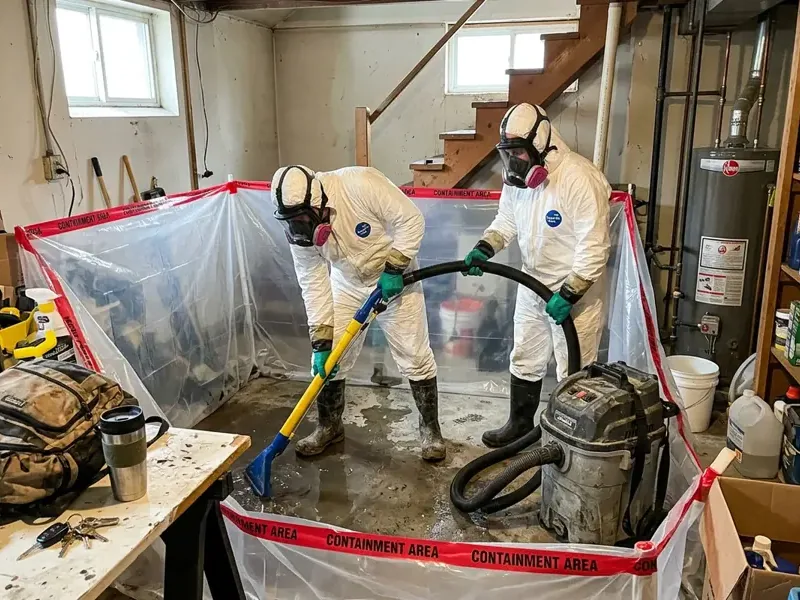
First steps for sewage backup cleanup
- 01Restrict the affected room
Keep people and animals out of the wastewater area, and avoid tracking material from the wet boundary into clean spaces.
- 02Stop contributing fixtures
Avoid flushing or running connected fixtures until the drain professional determines which use could worsen the backup.
- 03Leave absorbent items in place
Do not drag wet rugs or upholstered items through the building; establish a controlled removal route with the cleanup contractor.
- 04Describe the backup points
Report every affected drain and room so the assessment covers hidden movement beneath finishes as well as the visible pool.
How the team handles sewage backup cleanup
Drain repair addresses the obstruction or failed pipe. Sewage mitigation addresses what the wastewater touched, using protective equipment, controlled removal and documented cleaning before structural drying.
Define a controlled zone
The cleanup lead maps wastewater contact and sets access controls, selecting protective equipment for the assessed exposure before removal begins.
Remove affected porous material
The crew follows wicking above the visible mark and documents absorbent layers that cannot remain, using protected routes for disposal.
Clean and apply labeled treatment
Technicians remove soil from retained surfaces and use a suitable EPA-registered antimicrobial at its labeled application rate and dwell time.
Dry and verify after cleaning
The drying specialist monitors remaining structural materials, while source-repair records confirm that renewed fixture use will not repeat the backup.
What does sewage backup cleanup cost in Livingston, NJ?
Sewage backup cleanup commonly costs $2,000 to $8,000 or more. Protective controls, contaminated-material removal, cleaning, affected area and drying access drive the price; drain repairs may be separate.
The assessment separates immediate mitigation from later repairs. Review the material decisions and equipment allowance in the written scope.
(888) 471-9821Discuss the wastewater contact areaContained wastewater area
- Controlled access
- Focused porous-material removal
- Cleaning of retained surfaces
Several affected assemblies
- Wicking assessment
- Expanded removal and disposal
- Labeled antimicrobial treatment
Extensive sewage spread
- Multiple containment zones
- Broad material and contents work
- Structural drying records
Scope factors: Water category, wet square footage, material class and the delay before drying change the equipment and removal required.
Use the water damage cost calculator for a planning estimate; a site assessment determines the work.
Sewage Backup Cleanup work stages
- 01
Define a controlled zone
The cleanup lead maps wastewater contact and sets access controls, selecting protective equipment for the assessed exposure before removal begins.
- 02
Remove affected porous material
The crew follows wicking above the visible mark and documents absorbent layers that cannot remain, using protected routes for disposal.
- 03
Clean and apply labeled treatment
Technicians remove soil from retained surfaces and use a suitable EPA-registered antimicrobial at its labeled application rate and dwell time.
- 04
Dry and verify after cleaning
The drying specialist monitors remaining structural materials, while source-repair records confirm that renewed fixture use will not repeat the backup.
A backup near Northfield Center is not diagnosed from the neighborhood name. The township publishes water and sewer information, but a drain professional must determine the source and responsibility for the particular obstruction. Old Road and Livingston Avenue properties can have different private connections and access conditions.
Category 3 from the start
Sewage contact changes material decisions immediately. Absorbent flooring, insulation and damaged drywall cannot be treated as ordinary damp finishes. The contractor maps where wastewater traveled, including beneath cabinets and through connected floor joints, before choosing removal boundaries.
The cleanup team uses suitable protective clothing, gloves, eye protection and respiratory protection as the assessment requires. Containment and a controlled access route help keep contaminated footwear, tools and materials from reaching unaffected rooms. Occupants should stay outside the work area while those controls operate.
- Stop use of fixtures that may feed the affected drain until it is evaluated.
- Keep children, pets and unprotected occupants away from wastewater.
- Do not carry wet rugs or porous contents through clean rooms.
- Record the drain professional's findings separately from cleanup observations.
Remove porous materials beyond visible contact
Absorbent materials can wick moisture above the visible water mark. The mitigation contractor assesses that spread and removes affected porous layers above the waterline as needed to reach sound material. A tidy cut at the apparent mark is not enough when readings and exposure show contamination higher in the assembly.
After gross removal, the crew cleans accessible remaining surfaces. An EPA-registered antimicrobial must be suitable for the intended surface and applied according to its label, including the required dwell time. Spraying a product over debris does not replace cleaning or make a contaminated absorbent layer suitable to keep.
Drying begins after the contamination work
The drying technician sets airflow and dehumidification after the work area is ready for that stage. The file records material removal, cleaning methods and moisture progress separately, so the owner can see that evaporation did not substitute for sanitation. The drain source also needs resolution before normal fixture use resumes.
Do not use household fans to blow across sewage or mix cleaning chemicals in an attempt to make the room safe. Avoid direct contact and keep the affected space closed to occupants. A drain professional addresses the backup source; a properly controlled cleanup removes exposure from the building. Clear-looking wastewater still requires the same contamination assessment.
Wastewater needs a controlled cleanup route before equipment dries the room. Describe affected drains and rooms without entering the contaminated area.
(888) 471-9821Discuss the wastewater contact areaSewage backup cleanup in Livingston
Water damage assistance covers ZIP 07039, Northfield Center, Livingston Center and Livingston Circle. The assessment follows the wet materials in each building.
Other water problems to check
Sewage Backup Cleanup questions
Is sewage Category 3 even when diluted?
Yes. Sewage introduces gross contamination from the start. Added water or a lighter appearance does not make the exposure equivalent to a fresh supply leak.
Can contaminated drywall simply be dried?
Affected porous material requires removal according to the assessed contact and wicking. Drying does not remove sewage contamination embedded within an absorbent layer.
Why remove material above the water mark?
Moisture can wick upward beyond the visible contact mark. The contractor uses observations and measurements to reach the affected boundary rather than relying on appearance alone.
Does antimicrobial spray replace cleaning?
No. Soil and debris must be removed from retained surfaces first. The selected product also needs the labeled surface suitability, application and dwell time.
Who repairs the backed-up drain?
A drain or plumbing professional investigates and repairs the source. The written scope should separate that work from cleanup, material removal and drying.
When can occupants return to the room?
The contractor should explain the status of contamination controls, cleaning and remaining hazards. Access decisions need the assessed conditions, not just the disappearance of odor.
Remove contamination before drying the structure
The cleanup contractor documents containment, porous-material removal and surface cleaning before the drying specialist follows the remaining moisture.