Hardwood Floor Water Damage in Livingston, NJ
Cupped or darkened boards can reflect moisture beneath the visible surface. The floor-drying assessor compares affected wood, supporting layers and nearby dry material before recommending retention, access or removal.
(888) 471-9821Check moisture beneath the boards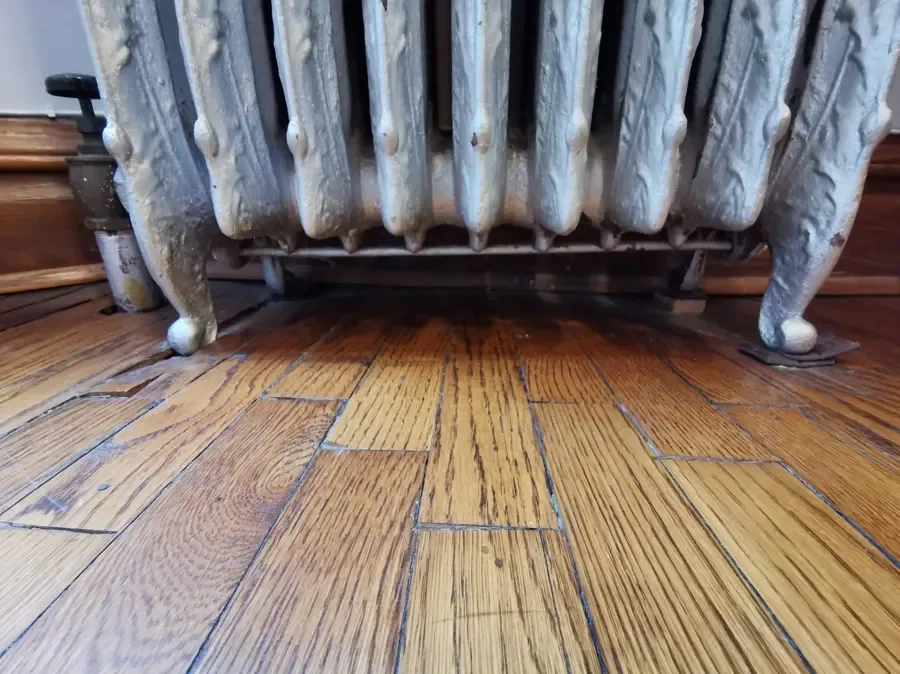
First steps for hardwood floor water damage
- 01Keep the surface visible
Remove accessible dry rugs and avoid placing an impermeable covering over damp boards while the moisture pattern is being assessed.
- 02Delay cosmetic work
Do not begin sanding or refinishing merely because the surface feels dry; supporting layers may still be releasing moisture.
- 03Record board changes
Photograph edge lift, gaps and color changes so the flooring professional can compare condition before and after the dry-out.
- 04Identify the floor product
Share installation records or spare material if available, helping the assessor distinguish solid wood, engineered flooring and the substrate.
How the team handles hardwood floor water damage
Wood-floor recovery depends on water category, exposure and construction. The contractor documents board condition and subfloor readings before cosmetic work changes the visible evidence.
Assess the complete floor
The technician identifies the product and supporting layers, compares affected locations with a dry reference and documents visible board movement.
Choose retention or access
The contractor considers contamination, adhesion and trapped moisture before selecting targeted floor drying, selective lifting or removal of damaged layers.
Monitor both surfaces and support
Repeated readings track accessible boards and substrate together, preventing a dry top face from hiding continued moisture below.
Hand over a measured record
The flooring professional receives the drying results and condition notes before deciding whether stabilization permits repair, sanding or replacement.
What does hardwood floor water damage cost in Livingston, NJ?
Hardwood floor water-damage mitigation often costs $1,200 to $5,500, before sanding or replacement. Floor construction, contamination, access to the subfloor and the drying method determine the scope.
The assessment separates immediate mitigation from later repairs. Review the material decisions and equipment allowance in the written scope.
(888) 471-9821Discuss the board and subfloor readingsLimited clean-water footprint
- Board and substrate assessment
- Focused recovery
- Reference moisture readings
Targeted layered-floor drying
- Specialized equipment assessment
- Edge and transition access
- Repeated substrate checks
Broad or damaged floor layers
- Selective material removal
- Expanded drying footprint
- Repair-decision documentation
Scope factors: Water category, wet square footage, material class and the delay before drying change the equipment and removal required.
Use the water damage cost calculator for a planning estimate; a site assessment determines the work.
Hardwood Floor Water Damage work stages
- 01
Assess the complete floor
The technician identifies the product and supporting layers, compares affected locations with a dry reference and documents visible board movement.
- 02
Choose retention or access
The contractor considers contamination, adhesion and trapped moisture before selecting targeted floor drying, selective lifting or removal of damaged layers.
- 03
Monitor both surfaces and support
Repeated readings track accessible boards and substrate together, preventing a dry top face from hiding continued moisture below.
- 04
Hand over a measured record
The flooring professional receives the drying results and condition notes before deciding whether stabilization permits repair, sanding or replacement.
A hardwood room near Livingston Circle cannot be assessed from its finish alone. Water may travel beneath boards toward a wall or doorway. At properties along Northfield Avenue and near Prospect Park, the assessment compares wet boards with accessible supporting layers and identifies the floor assembly before equipment is selected.
Cupping describes a condition, not a repair method
Board edges can rise when moisture differs across the wood thickness. The assessor records the pattern and measures more than one location. Sanding too early can remove wood while the moisture imbalance remains, leaving a different surface problem once the boards change again.
The team identifies whether the floor is solid wood, an engineered product or another finish that only resembles wood. Installation over a slab, plywood or other supporting material changes access and drying options. The contractor should confirm that assembly rather than select a method from the visible board width.
- Record cupping, gaps, discoloration and any loose sections before work.
- Check beneath accessible transitions and around cabinet or wall edges.
- Compare affected boards with a suitable dry reference of similar material.
- Separate structural moisture recovery from sanding and finish restoration.
Targeted drying must reach the supporting layer
Specialized floor-drying systems may help with suitable clean-water losses, but they are not appropriate for every material or contamination condition. The mitigation contractor evaluates adhesion, access and water category before deciding whether the floor can remain. Sewage or outside floodwater contact can require removal of affected absorbent flooring.
A dry board surface can coexist with a wet underlayment or subfloor. The drying record therefore needs observations below the top face where access permits. If a layer blocks moisture release, selective removal may be necessary despite an improving surface reading.
Make the finish decision after stabilization
The flooring professional considers the board condition after appropriate drying and any product requirements. Some damage remains even when moisture reaches an acceptable level. The owner should understand that a dry-out supports an informed repair decision but does not mean every board returns to its original shape or appearance.
Avoid sanding, refinishing or covering damp wood while the moisture assessment is incomplete. Rugs and impermeable coverings can conceal changing conditions. Do not force swollen boards or lift heavy sections without evaluating nearby fixtures and services. The drying contractor and flooring professional should agree on the sequence so a cosmetic step does not hide a wet supporting layer.
A changing board shape needs a moisture comparison before sanding. Describe the floor product, source and areas where the boards first lifted.
(888) 471-9821Discuss the board and subfloor readingsHardwood floor water damage in Livingston
Water damage assistance covers ZIP 07039, Northfield Center, Livingston Center and Livingston Circle. The assessment follows the wet materials in each building.
Other water problems to check
Hardwood Floor Water Damage questions
Can every cupped floor be saved?
No. Recovery depends on the product, exposure, contamination and remaining condition. Drying supports the repair decision but does not mean all boards recover their original shape.
Why delay sanding?
Sanding while the moisture imbalance remains can remove material prematurely. The floor professional needs stabilized conditions before deciding how to correct the surface.
Do floor-drying mats work on every installation?
No. The contractor must assess the product, adhesion, substrate and water category. Some assemblies need access or removal instead of a mat-based approach.
What if only the board surface reads dry?
The supporting layer may still hold moisture. The assessor checks accessible substrate and edges to understand the complete assembly rather than relying on one surface point.
Does floodwater change the decision?
Yes. Contamination can make affected absorbent flooring unsuitable for retention even when a clean-water loss might have allowed a drying attempt.
When is replacement flooring ready to install?
The installer applies the requirements for the replacement system. Mitigation readings and the substrate condition inform that decision, with additional testing where the product requires it.
Make the floor decision after the moisture check
The drying specialist records the supporting layers as well as the visible wood so the next repair step has a sound basis.